Showing posts with label nazia. Show all posts

Thursday, March 15, 2012

Scribe Post 3/13/12

Today in class we:
- Watered and Measured the plants
- Took a Ch.16 Quiz
- Finished Ch.28 Notes

Homework:
- Complete Ch.28 Study Guide due 3/19
- UP pg.41-54 due 3/19
- UP pg.19-34 read and prep lab for tom.
- Wildland project
- Ch.28 Quiz Tuesday 3/20
- BRING TEXTBOOK TOMORROW!

Plant Reproduction


This diagram shows the reproductive process of the male gametophyte (pollen) and the female gametophyte (embryo inside an ovule).

Process of Double Fertilization


The 2 diagrams above show the 4 steps to Double fertilization:
1. Pollination
- A pollen grain sticks to the stigma and germinates then,
- it travels down the pollen tube and stops midway to:
2. Form into 2 sperms
3. Travels rest of the way through the pollen tube to the ovule
4. Double fertilization occurs
- the first sperm fertilizes the egg, forming a normal 2n zygote.
- the second sperm fertilizes two polar bodies to form 3n or the tripod central wall, which later becomes the endosperm that nourishes the embryo.

Seed Formation

-Cotyledons are organs that absorb nutrients from endosperm for the developing embryo
-Embryos develop a tough protective seed coat when mature
-The seed stays dormant until environmental conditions are favorable

Fruit Formation

Fruit= mature ovary

Seed Germination


-The seed coat ruptures as it expands with water
- The embryos' roots emerge first then its' shoots which from a hook to protect it
- The plants' leaves starts to expand and photosynthesize
- Only a small number of seedlings are able to reproduce

Plant Growth
-
Some plants have indeterminate growth with means that plants can continue to grow as long as they live
- They have a finite life span
- Annuals mature and reproduce and die all in 1 season Ex.) wheat, corn, rice, impatients
- Biennials grow in the 1st year and reproduce during the second year Ex.) carrots
- Perennials live and reproduce for many years Ex.) trees, shrubs, some grasses
Primary Growth= lengthening
Meristem- are cells that divide to create new cells and tissues
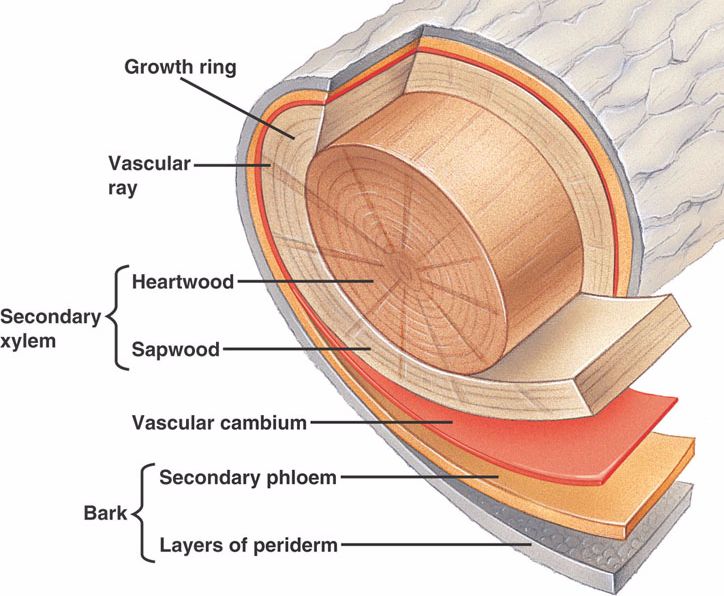
Secondary Growth= thickening
wood= dead tissue
Vascular cambium- generates secondary xylem and phloem. Secondary xylem produced each year gives the thickness of perennial plants and wood= annual growth of rings
Cork cambium protects the stem when the plants' mature, then it dies.
Everything outside the vascular cambium: secondary phloem, cork cambium, cork = bark

Pollinators and flowers have a mutual symbiotic relationship
Flower benefit through seed dispersal and pollination
Pollinators benefit through nectar and pollen for food
Color and fragrance attract the pollinators
Birds see red/pink
Bees use smell

Sincerely,
Nazia

NEXT SCRIBE POST: ***Michael***

Tuesday, March 13, 2012

Scribe Post 3/13/12

Today in class we:
- Watered and Measured the plants

- Took a Ch.16 Quiz
- Finished Ch.28 Notes

Homework:

- Complete Ch.28 Study Guide due 3/19
- UP pg.41-54 due 3/19
- UP pg.19-34 read and prep lab for tom.

- Wildland project
- Ch.28 Quiz Tuesday 3/20
- BRING TEXTBOOK TOMORROW!


Plant Reproduction

This diagram shows the reproductive process of the male gametophyte (pollen) and the female gametophyte (embryo inside an ovule).

Process of Double Fertilization


There are 4 steps to Double fertilization:
1. Pollination
- A pollen grain sticks to the stigma and germinates then,
- it travels down the pollen tube and stops midway to:
2. Form into 2 sperms
3. Travels rest of the way through the pollen tube to the ovule
4. Double fertilization occurs
- the first sperm fertilizes the egg, forming a normal 2n zygote.
- the second sperm fertilizes two polar bodies to form 3n or the tripod central wall, which later becomes the endosperm that nourishes the embryo.

Seed Formation
-Cotyledons are organs that absorb nutrients from endosperm for the developing embryo
-Embryos develop a tough protective seed coat when mature
-The seed stays dormant until environmental conditions are favorable


Fruit Formation

Fruit= mature ovary

Seed Germination


-The seed coat ruptures as it expands with water
- The embryos' roots emerge first then its' shoots which from a hook to protect it
- The plants' leaves starts to expand and photosynthesize
- Only a small number of seedlings are able to reproduce

Plant Growth
-
Some plants have indeterminate growth with means that plants can continue to grow as long as they live
- They have a finite life span
- Annuals mature and reproduce and die all in 1 season Ex.) wheat, corn, rice, impatients
- Biennials grow in the 1st year and reproduce during the second year Ex.) carrots
- Perennials live and reproduce for many years Ex.) trees, shrubs, some grasses
Primary Growth= lengthening
Meristem- are cells that divide to create new cells and tissues
Secondary Growth= thickening
wood= dead tissue
Vascular cambium- generates secondary xylem and phloem. Secondary xylem produced each year gives the thickness of perennial plants and wood= annual growth of rings
Cork cambium protects the stem when the plants' mature, then it dies.
Everything outside the vascular cambium: secondary phloem, cork cambium, cork = bark

Pollinators and flowers have a mutual symbiotic relationship
Flower benefit through seed dispersal and pollination
Pollinators benefit through nectar and pollen for food
Color and fragrance attract the pollinators
Birds see red/pink
Bees use smell

Sincerely,
Nazia

NEXT SCRIBE POST: ***Michael***


Wednesday, January 25, 2012

Evolution


Today in class:
-Turned in course
recommendations sheet
-Turned in Lab 38
-Started Notes packet up until pg.13


Darwin and Natural Selection
- All life is connected
-
The basis for this kinship is evolution

- Evolution has transformed life on
Earth from its earliest beginnings to its extensive diversity today
- Evolutionary view came into focus in 1859 with Darwin's book

- One of Britain's most renowned biologists
- Published The Origin of Species 17 years later.

- Was the most influential scientist in the development of modern biology.
- 2 main points in book:

1) species living today descended from ancestral species= "descent with modification" = evolution
ex.)The diversity of bears is based on different modifications of a common ancestor from which all bears descended.
2) The mechanism for evolution is "natural selection"
-Darwin loved nature, Disliked medical school. Became a minister. Became a naturalist for a voyage around the world when he was 22 years old.
- Darwin's "Voyage of the HMS Beagle
"
- Observed and collected thousands of specimens, Observed adaptation
s of organisms. Most of animals of Galapagos Islands live nowhere else in world, but they resemble species living on the South American mainland. It was as though the animals strayed from mainland, then diversified as they adapted to environments on the different islands.
- Darwin saw large diversity of animals on Galapagos Islands, off coast of South America
-If an ocean separated islands, it isolated 2 population
s of a single species. The populations could diverge more and more in appearance as each adapted to local environmental conditions.
-After many generations, 2 populations could become dissimilar enough to be separate species-14 species in the case of the birds called Galapagos finches.(This is now called divergent evolution)
-They have beak shapes and coloration that are adapted to their environments
-The beaks are adapted to certain food sources on the different
islands; the colors protect them from predators
-Q:How did Darwin explain these adaptions, or different beaks?
-A:Natural Selection! 3 main points:
1) Far more offspring are produced than the environm
ent can hold. Overproduction leads to a struggle for existence among the individuals of a population.
2) Individuals in a population vary in many traits no two individuals are alike.
3) Those individuals with traits best suited to the local environment will have the greatest reproductive success. They will leave the greatest number of surviving fertile offspring. They will reproduce more of the same. This unequal repr
oductive success=natural selection.
-Nature decides what traits are most fit.
-Adaptation is the accumulation of favorable variations in a popul
ation over time.
-EX.)beaks well equipped for available food sources, and markings that reduce predation=finches survive to produce more.(Survival of the
Fittest)
-Darwin also looked at "Artificial Selection" going on
with farming.
-Humans have been modifying other
species for centuries by selecting breeding stock with certain traits.
-These vegetables and flowers no longer look like their ancestors.
Artificial Selection in pets- have been bred for human fancy. Dog
breeds-all are descendants from one ancestral population of wolves
"Humans" screened
the heritable traits of populations instead of "nature" or the natural environment.
-Natural selection in action today: Antibiotic resistant forms of tuberculosis causing bacteria have made the disease a threat again in the U.S.
-Humans are connected by descent from African ancestors.
-Example of natural selection-abuse of antibiotics has sped up the evolution of antibiotic resi
stant bacteria.
-Evolution of pesticide resistant insects: by spraying crops with poisons to kill insect pests, humans have favored the reproductive success of insects with inherent resistance to the poisons.
-Related species of insects called mantids have diverse shapes and colors that evolved in different environments. Camouflage is an example of evolutionary adaptation.

Evolution-2 modern definitions:

A. the genetic composition of a population changes over time
B. all life desce
nded from a common ancestor, from the earliest microbes to modern day organisms
-Darwin is ranked as the 4th most influential person of the past 1,000 yrs.
-Most scientists in Darwin's day thought:
-Earth was young(6,000 yrs old)
-Earth was populated by millions of unrelated species
-Darwin's book challenged that,and was radical for its time
An example of a camouflage is shown above, of a leaf mantid.
-Anazimander(Greek philosopher)had ide
a that life arose in water, and simpler forms of life preceded more complex ones.
-Aristotle(Greek philosopher)held that species are fixed or permanent, and do not evolve(are static).
-Buffon(1700s)(French naturalist) studied fossils-said Earth may be much older than 6,000 yrs. Proposed that a species in a fossil could be an ancient version of a living species.
-Lamarck(1800s)(French naturalist)said that life evolves through adaption ex.)a powerful bird's beak.

However, he had an erroneous views of how adaptations evolve:
-He said "Inheritance of Acquired Characteristics"- by using or not using body parts, one can develop certain characteristics, which can pass on to offspring.

Ex.)if you exercise beaks and get stronger you can pass that trait down to offspring.(Use & Disuse Theory) Incompatible with modern genetics.
-Lyell(Scottish geologist)-said ancient Earth was sculpted by gradual geologic processes that continue today.(Mountains,earthquakes,erosion.)Earth was very old. Gradualism principle.
-Wallace(British naturalist)(1850s)developed a concept of natural selection identical to Darwin-both were presented to the scientific community. Lamarck(shown above)
-Darwin's book evidenced 2 major points:
-Organisms on Earth today descended f
rom ancestral species, accumulating different modifications or adaptations-"descent with modification." History of life is analogous to a tree.
-Natural selection is the mechanism for descent with modification
What is some evidence in support of evolution? (5 examples)
1.)The Fossil Record


Fossils- preserved remnants or impressions left by organisms that lived in the past
-Most found in
sedimentary rocks
-Younger strata are on top of older ones; positions of fossils in the strata reveal their
relative age
-Fossil record-chronology of fossil appearances in rock layers, marking passing of geologic time
-Oldest fossils date from
3.5 billion yrs ago, are prokaryotes.
-
Fishlike fossils are oldest vertebrates, then amphibians, reptiles, then mammals and birds.
-
Paleontologists- scientists who study fossils-found fossilized whales that connect them to their land-dwelling ancestors.
2.)
Biogeography- the geographic distribution of species
Ex.)Tropical animals in South America are more closely related to species in South American
deserts than to species in African tropics.
Ex.)
Australia has a diversity of pouched mammals(marsupials) but few placental mammals. They are hospitable to placental mammals. Unique Australian wildlife evolved on island continent in isolation from regions where early placental mammals diversified.
-Biogeography makes little sense if species were individually placed in suitable enviroments. Instead, species are where they are because they
evolved from ancestors that inhabited those regions.
3.)
Comparative Anatomy- the same skeletal elements make up the forelimbs of humans,cats,whales, and bats- all are mammals.
-The functions differ, but
structural similarity indicate they descended from a common ancestor- homology.
Ex.)forelimbs of diverse mammals, all have same
bones
Ex.)human spine and knee joints derived from 4-legged mammals-are subject to sprains, spasms,common injuries because of our
bipedal posture.
Ex:Vestigial Structures
- These are some of the most interesting homologous structures which have marginal, if any, use or importance to the organism. They are historical remnants of structures which had important functions in ancestors.
Ex.) the whales of today lack hind limbs, but have vestiges of pelvic and leg bones of their four-footed terrestrial ancestors.
-Vestigial organs are evidence of evolution-shows linkage to a past ancestor.

Homework:
-UP pg 19-20
-UP pg 13-16 due Monday

See you in class!
~~Nazia~~


NEXT SCRIBE:**DUSTIN**


Wednesday, November 9, 2011

Scribe Post 11/9


Today in class:
- Turned in the homework pg.19-37

- Turned in EC pg. 39-40 (if you did it)

- Took quiz on Meiosis

-Worked on pg. 41 in UP after quiz

- Got new notes packet- Genetics & took notes

Notes:
GENETICS - CH.9

Gregor Mendel: 1866
  • 1st to analyze patterns of inheritance scientifically
  • In a garden of an abbey in Austria, bred garden peas
- The reproductive parts of the flower are the stamen and the carpel.
  • The stamen is the male reproductive part that has pollen, which is sperm.
  • The carpel is the female reproductive part with the egg and once its fertilized it turns into a full, ripe flower.
  • One way flowers get fertilized is through self fertilization, where its own stamen fertilizes its own carpel.
  • Parents pass heritable factors (genes) to their offspring
  • Genes retain individuality generation after generation
  • Self vs. Cross fertilization- Self fertilization fertilizes by itself and Cross fertilization is when its pollinated by a different plant
  • Hybrids (Aa)- offspring of 2 different true breeding varieties (Pure breeds)- AA or aa
  • *P generation. F1, F2- F3
  • Monohybrid Crosses- 1 trait
  • Alleles- alternative forms of a gene
  • Dominant(A) vs. Recessive- masked Aa or aa


P- Parent
F1- Offspring
F2- Grandkids
etc.Link
To understand more about genetics or to answer any questions, check out this site:
http://learn.genetics.utah.edu/content/begin/tour/


Homework:

- Read and study UP p. 43-44

- Make sure to know the definitions!
-Make note cards if you need too, but PRACTICE! :)
- Read CH 9 p.142-168

GOOD LUCK!

SINCERELY,
Nazia

NEXT SCRIBE**JEREMY**

Wednesday, October 19, 2011

Wednesday, October 19, 2011

Today in class:

- Passed back the Understanding Bacteria worksheet

- Did two labs on pgs. 19-25

- The first one was How Common Are Bacteria and How Quickly Do They Reproduce?

- The second one was Using Antibiotics to Stop Bacterial Growth

- In this experiment we’re using the bacteria Bacillus subtilis.

- Then we took notes on Prokaryotes and bacterial cell and reproduction (pgs. 8-11)

Homework:

- You can start answering the analysis questions on pg.21 and 25. For some of these questions, you don’t need to know the results of the experiment in order to answer them.

- Read and highlight key points on Unit Packet p.27-29

- Fill in Unit Packet p. 31-32 (use text/internet)- DUE FRIDAY 10/21

-Work on disease project due Monday 10/31

-Work on Spice Lab due by 10/25

1ST LAB

- You need a sterile petri dish w/agar, a wax glass marking pencil and tape.

- First divide your petri dish into quarters and mark the outside bottom surface and number the sections 1-4.

- Next, select 3 objects to test for the presence of bacteria. Each object or surface selected is to be touched to its own numbered quarter of agar. Objects can we lightly and directly touched onto the agar and then removed. Surfaces can be tested by rubbing a sterile cotton swab across one of the agar quarters. Use a new swab for each surface tested.

- Cover of the dish should only be partly raised when samples are being applied to the agar.

- Leave one section unexposed, so this will be your control.

- Then record the type of surface or object exposed to each section of the agar.

- Put your name at the bottom and tape the petri dish shut to prevent contamination.

- Place the dish upside down in an incubator at 37 degrees Celsius and wait 24 to 48 hrs until you remove the petri dish.

Side notes

- The agar looks yellowish

- Label sections on agar side

- Number the quadrants in a small font, so you can see the result later on.

2nd LAB

- You need prepared nutrient agar sterile Petri dishes, sterile cotton swabs, tweezers, antibiotic disks- 3 different kinds, wax marking pencil, broth culture of bacteria (Bacillus subtilis), sterile paper disk and an incubator.

- Get a sterile Petri dish w/nutrient agar and label the top w/your intials.

- Use a cotton swab dipped in the bacteria broth to cover the entire surface of agar in the Petri dish. (use a back and forth motion to guarantee the entire surface was covered w/ the broth culture

- Divide the dish into four quarters w/ a wax pencil and label them 1-4.

- Add a sterile plain paper disk in the remaining quarter to serve as a control.

- Incubate the dish for 24-48 hrs. at 37 degrees Celsius. If the antibiotics are affective against the bacteria, there will be a clear zone around the disk.

Class Notes

Prokaryotes:

- Evolved and lived all alone on Earth for 2 billion yrs.

- Found where ever there is life and outnumber all eukaryotes combined

- Inhabit soil, skin, and human mouths or habitats that are too cold, too hot, too salty, to acidic, or too alkaline for any eukaryote.

Ex,) black plague, tuberculosis, food poisoning all caused by bacteria

- MOST bacteria are beneficial or benign

6 Kingdom Classification Scheme:

Kingoms

  1. Archea
  2. Bacteria
  3. Protist
  4. Plantae
  5. Fungi Soil Bacteria
  6. Animalia

Prokaryotes lack membrane-enclosed nucleus and numerous other membrane-enclosed organelles.

Two main Branches of Prokaryotes:

1. Archaea (ancient)

- Originate from Earth’s earliest cells

- Most inhabit extreme enviroments Ex.) Thermophiles- heat lovers, Methanogens- give off methane gas and aid in digestion

2. Bacteria

- Causes human diseases

Typical Bacteria Cell

- Absense of nucleus

- Most have cell walls exterior to plasma membrance

- Absense of membrane-enclosed organelles

- About 50% are motile

Shapes of Bacteria: helps to identify prokaryotes

Cocci – spheres Greek for “berries” (sing. Coccus)

Bacilli- rod-shaped (sing. Bacillus)

Spirochete – spiral-shaped (sometimes called spirillum)

Bacterial Reproduction

- Can reproduce at a phenomenal rate if conditions are favorable

- The cells divide by a process called binary fission (copying DNA and then dividing)

- In 24 hrs on cell could create a colony equivalent in mass to 15000 humans.

Bacterial Nourishment: obtaining energy and carbon

Prokaryotic evolution “invented” every type of nutrition we observe in all living organisms, plus some modes unique to prokaryotes.

See you tomorroww! ~ Nazia

Next Scribe: *****HELEN*****